Showing posts with label research. Show all posts

Monday, April 25, 2011

"U" is for Urban Dictionary

Ever walk by a group of teenagers (or anybody, really) and hear words that sound like English, but you know can't be, leaving you to wonder, "What the hell are they even talking about?  And get off my lawn, damn kids!"

Or ever hear someone use common words in a totally new and unusual way, making their original meaning irrelevant? Or hearing someone use an acronym and wondering if repeating it in front of your boss will get you fired or a promotion?

Yeah, it happens to all of us.

Enter Urban Dictionary, the every-person's personal Rosetta Stone for slang.  Just type in the word you're curious about (providing you know how to spell it, and have nerves of steel to find out what it actually means), and search.

Take nom for instance.  You might have heard someone say they were going to get noms or that they were in the middle of nomming when someone called them.  Curious, you'd just search, and find out that nom is an expression of eating, and derived from "om nom nom."  I use this word a lot myself.  I say that the cat was nomming on my shoelaces, or that something smells like delicious noms, or seems nommable.  There's even a little green monster in an app game for iPhone/Android who is named Om Nom.  The point of the game (which is called Cut the Rope) is that you feed Om Nom candy.  Makes sense, now that you know what nom means.

Since 1999 (so says their website), Urban Dictionary has helped millions define the world around them.  As a writer, I find the site to be fascinating.  I love learning new words, and you never know when using one might come in handy.  I strive to make my dialogue realistic when I write it, and for that, I often have to look things up.  Working with how real people speak adds realism to your stories and connects with your audience.

Any thoughts on Urban Dictionary?  Are you a fan?

xoxo Sarah

Saturday, April 23, 2011

"T" is for Technology

Writing technology, you are my friend.  You let me write, research, edit, and communicate with an ease that past writers never knew existed.

Let me back up a bit.  Writing technology varies from state-of-the-art to any-idiot-can-use-it.  And I use it all. My least used bits of writing technology are, sadly, the pen and paper, but that's because I have terrible handwriting and waste more time trying to decipher the hieroglyphs on the page that are meant to be English words than proves to be useful.  But, I do use them. I carry a notebook around with me, or at the very least have scrap paper and a (working) pen somewhere within reach so I can jot down notes, a line of dialogue, or a short scene idea and not risk forgetting it later on.  I know some writers also use their phones to record messages to themselves if they don't have paper available.  I know the iPhone and most likely other smart phones have voice recording capability (and no, I'm not talking about calling yourself from another phone and leaving yourself a voice mail, though you could do that, too.)  

I don't use a typewriter.  Period.  I had a terrible experience growing up with using one, something about being forced to type out a ridiculously long-ass paper for my crazy seventh grade English teacher.  Even though my mother kindly took over this Sisyphean task for me, I've been scarred for life.  Some writers, and I don't know any personally, but I'm sure they're out there, insist that this is the only true way to write.  I call bullshit on that, not to mention that it sounds snooty.  I say that as long as you're comfortable using something, write the way you want to.  Whether you're cranking your novel out on ten thousand Post-It notes with a Sharpie or clicking away on an iPad, it's all good to me.  Just don't make me edit your Post-It and Sharpie novel.  I'd just get them stuck all over my clothes.

My tech of choice is a laptop.  I use a wireless keyboard with mine because I like the gently curved configuration that's easier on my wrists and will hopefully stave off carpel tunnel for years to come.  I like the portability, too.  I can take it to the library with me, or when I travel somewhere.  I can't do that with a desktop computer.  Sadly, mine is on its way out after a good four-ish year run.  I've started urging it to do what it's supposed to do, often in loud, expletive-laden tirades which, unfortunately, have no effect on its processing speed.

I don't have a tablet computer (such as an iPad) but I'm not ruling it out for any future use.  I like the way the technology is changing, but I don't want to get one just to be stuck six months later holding something that's a dinosaur compared to the awesome new thing that just came out.  I'll wait a few years.  Prices always come down as well.

Technology also gives writers access to so much.  We have a whole world of research at our very fingertips, when before, we'd have to trek to the library and slog through volumes of unhelpful materials before finding one useful nugget of information.  The internet can even help you research your research.  Yeah.  Wrap your mind around that.  If you're looking for information on a topic, you can look up places to find more information.  It's worth looking things up, because the more real (or at least plausible) your novel is, the more people will like it.  Even if it's a fantasy work, doing your research pays off.  Another awesome thing: I can send my work off to Shelley in an email attachment and she can get it back to me at her usual lightening speed thanks to computers and the web.  Thank you, Al Gore, for inventing the internet.  We salute you.

If you're a writer, what technology do you benefit from and use?  Even if you're not a writer, do you have a favorite piece of technology?

xoxo Sarah

Tuesday, April 12, 2011

"J" is for Jargon

I was poking around the internets and deciding what to do for my letter "I" for the A-Z Blogging Challenge, when I was hit by the proverbial lightening bolt and decided what my "J" was first.

Jargon.

The terminology specific to a trade, profession, or group.  Thank you, dictionary.com.  You have enabled me once again by relieving me from leaning over and grabbing my real one.

"I object!"
Most people, myself included, hate it when they're talking to someone, be it a friend or a professional (like a lawyer or doctor), and they won't stop using terms you just don't understand when explaining something.  "All right," you say, fighting the urge to go all ragey on their obviously self-important ass, "could you repeat everything you just said...but in plain English, this time?"

In situations like this, jargon is annoying and almost - almost - warrants a facepunch.  Part of me thinks that the person you're talking to is probably so wrapped up in your conversation that they don't realize that they're using unfamiliar terms.  The other part of me thinks they're doing it on purpose.

In writing, jargon can be necessary, but it has to be done correctly.  If jargon is used, it can't lose the reader; the author needs to make sure that the meaning can be deciphered by anyone who picks up their work.  That's not to say that there needs to be a glossary at the end of your medical novel (not that that's a terrible idea), but definitely make what you mean understandable so it doesn't take the reader or viewer out of the story.  Make them think, but not too much.
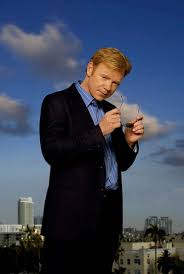
Example: "His BP is a normal 120/80," the nurse said to Dr. McHotstuff as she removed the blood pressure cuff from the patient's arm.  No, I'm not sure how accurate this encounter would be because I'm not a doctor (but I have watched a lot of Grey's Anatomy and House, so that should count for something).  Though "BP" is considered common jargon, to make the meaning of what the nurse said clear to you lovely readers, I added the bit about what she was doing...removing the blood pressure cuff.  Do most people know what BP means?  Yeah, probably.  Just like most CSI fans know that "GSW" means "gun shot wound," "subdural hematoma" means something about bleeding in the brain, and that when Horatio Caine puts his sunglasses on that usually means he's going to say something that will make me roll my eyes.  Okay, that last one isn't jargon, but for the others, their meanings can be inferred from what the characters are doing (watching an autopsy and poking around the dead body, conversations with the other characters, looking at x-rays) even though most of us aren't trained to know the terms.

Jargon can add to the realism for the reader (or viewer).  Even though I know Hugh Laurie isn't really the brilliant-but-flawed Dr. Gregory House, his dialogue and awesome acting skills convince me.  However, if he was to say something about "that thing on her leg" or "that gross stuff coming out of that guy," when he's being serious and not in one of the character's moments of biting snarkasm, the show would not be as convincing.  In fact, I'd be wondering what the hell Dr. Cuddy was thinking in hiring that guy.

In writing, Michael Crichton always put a lot of effort, time, and research into writing his novels, and was known for using lots of jargon.  Jurassic Park wouldn't have been as intense if the characters didn't use proper terms relating to biology and cloning, and the pirates in Pirate Latitudes wouldn't have been convincing if they didn't know anything relating to sailing.  Hell, even Capt. Jack Sparrow knew nautical terms. 


Creating your own world in your fiction?  Make up your own jargon to use!  What do you think George Lucas and Gene Roddenberry did?  And they created two little somethings called Star Wars and Star Trek.  Lightsabers and warp drives, anyone?

So don't shy away from using jargon, but use it as it's meant to be used.  The best way to get a handle on it is to talk to real people who use it.  Doctors, lawyers, truckers, sailors, IT professionals, military.  You don't want your characters to sound ridiculous, in turn making you sound ridiculous.  Google is also helpful, and you can find glossaries of different terms by profession if you look.

In short, jargon can help make your awesome story even awesomer, but use it realistically or you'll look like an idiot.

xoxo Sarah