Showing posts with label reading. Show all posts

Tuesday, November 10, 2015

Leveled reading systems=pigeon-holed students? #amreading

Let me preface this by saying that I'm not a parent, and I haven't frequented schools where reading systems were prevalent in over twenty years.

So let me tell you a story.

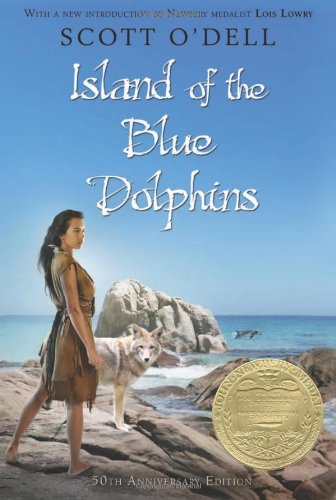
I was recently chatting with a friend who does have elementary-school-aged children, and we got to talking about the books we enjoyed when we were in school, required reading or otherwise. Island of the Blue Dolphins, Hatchet, My Side of the Mountain, etc. She--I'm not feeling creative today, so I'll call her Polly Parent--is active in volunteering in her kids' classrooms and around the school as well.
I mention remembering the little numbers on the backs of children's books--not the ISBNs, but the reading level. Polly tells me that reading levels still exist, but they're broader now; more...encompassing. Restricting, even. I ask he what she means, and she says that, in her kids' school, they use a leveled reading system. I don't know whether it's this one from Scholastic, but there are a bunch out there. Anyway, I don't remember if she said they use letters or numbers to signify levels, so I'll go by the numerical method to keep things simple.

From what Polly tells me, each student is assessed for their reading level. Well, okay, that seems standard--I can remember having to do that when I was in elementary school, and so did Polly. But after they're assessed, the school is stricter about allowing the students to branch out from their "assigned" level; at least that's Polly's impression. She says she's seen kids who won't even go near a book designated with a higher level than they were assessed at, even if it was on a topic they might find interesting. Example: If a kid is assessed at a level 4, they'll avoid a level 5 book like the plague. She's not sure if it's just the kids, or something they're being told (i.e. "Don't read a book at a higher level until you're assessed at that level"), but either way, it's disconcerting. They're being pigeon-holed; even if it's not explicitly stated, the restriction is communicated in some way.

Here's where it really gets depressing--Polly said that she'd heard that a class of students had gone to the school library, and when the teacher went to gather her class to take them back to the classroom, she noticed that a student had checked out a book at a higher level. "You can't read that!" the teacher told the student. Whether the teacher took the book from the student or the student was "allowed" to keep the book wasn't discussed.

At that point, I saw red. How was this happening?

Books are for everyone. Reading, like most things, takes practice--doing things that are more difficult is how we get better at it. I can remember taking books out of my school library, or my town library, or grabbing them from my family's shelves, that I'd have difficulty with. Guess what? I either read them with someone, or bumbled through it on my own with occasional help from someone else. I'd poke through old National Geographic magazines (I can't be the only one whose families stockpiled these like they'd make great burning material for the coming apocalypse), which are obviously written for adults. But I'd use my "context clues"--the words I did know, and the amazing pictures--and infer what the articles were about.

How do we expect kids to get better at reading--and learning--if their access to the materials they want to read is so carefully guarded and controlled? "Teaching for the test" and "common core" are already screwing us over; why is reading going the same way? If their natural curiosity is being stifled in such a way, do we really expect students to be passionate and interested in things as they get older? People already complain that our younger generations are too tightly monitored and don't develop coping tools or adequate levels of independence; could this be because--gasp--they aren't allowed to learn (in some ways) as they want to? To explore and experiment and find their interests? Reading is a vital part of development and communication, and we're taking that away and making it more regimented? Telling students they "can't" read something? How is that supposed to help educate and impart knowledge?

I say, kids should be able to read whatever they'd like if it's developmentally appropriate and they have access to it. If you're a parent, make it clear to your school (and the board of education, if necessary) that you want your child to be able to read to challenge themselves, check out whatever books they want from the library, and that, even though the students are assessed for reading level (as they should be), that that shouldn't define what they can do.

Your thoughts on this?

xoxo Sarah


Sunday, July 24, 2011

Adult Read Blogfest hosted by Heroines With Hearts!


When I saw a few posts on my blog dashboard about this awesome little blogfest, I had to participate.  It's being run by the lovely ladies at Heroines With Hearts from July 24th /25th.  The rules for this blogfest are simple. All you have to do for this blogfest is fess up on the first adult book you picked up and read: whether a classic, a racy novel or that of unusual content, then post your entry on own blog July 24th/25th.  If you're interested in joining in the fun, please click the "Heroines with Hearts" link above.  

Let's see.  The first romance novel I read that had what could be considered "unusual content" would have to be Spoils of War by Kari Gregg.  The book involves a male/male pairing, so it won't be for everyone, but damn, is it hot!  I've read plenty of romance novels, but, despite writing my own M/M story, I wasn't sure which ones would make for good reading.  

I was lucky enough to meet Kari Gregg at the RWA 2011 conference at one of the workshops, and she not only gave me some fabulous recommendations but convinced me to check out her book as well.  I'm glad I did. 

The blurb is as follows: 

Enslaved during the invasion of the rival King of Herra, Micah cut off his emotions and adapted to his new life in servitude. Xerxes, the Herran King, abuses his captive to keep the neighboring kingdom of Alekia under his yoke, but after Micah nearly dies when plague sweeps Herra, the Alekian King sends Eli to bring his beloved son home. Institutionalized by his slavery, unable to cope with his freedom, Micah seeks to please the new master he's found in Eli throughout their harrowing journey to a homeland he no longer remembers. Eli protects the young man and introduces Micah to the pleasures denied him as a prisoner. Will Micah accept his noble birthright when they reach Alekia, and more importantly, can he accept Eli as the devoted slave his father has given him rather than the master he's come to love?

It's saved on my Kindle now, and though I'm sure I will enjoy reading many more romance novels of all kinds in the future, this one will likely remain a fun favorite.  

Do you remember your first romance novel?  Perhaps one that was racy, or had content a little out of your comfort zone?  Please share!

p.s. I suppose that if you define "adult reads" as any novel not geared specifically toward younger children or teenagers, then The Hobbit would likely take that prize.  I was about ten when I read that one.  

xoxo Sarah

Monday, May 9, 2011

Titles and Such...

What's this?  A post?  Yes!  I have returned.  Sorry for my absence, even though it was only about a week.  I needed a sanity break to get myself back together after the A-Z Challenge, and I also wanted to take some time to get back into the mind of Jack, my protagonist in The Curse.  Want to know a little more?  Click above on "Novellas and Short Stories."  I'll add more in the future.  Our home is also on the market, as if I needed MORE stress.

Anyway, back to what I wanted to talk about.  Just so you know, I'll probably post something on this again when I actually have something ready to publish, but a little Amazon link recently found its way over to me on Facebook, and I couldn't stop smiling when I read the title.

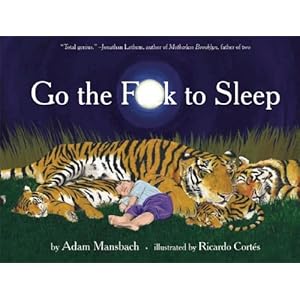
Go the F**k to Sleep.


Yes, this is real.  Click on the title above for the link to the awesomeness.

A friend posted a link to this not-yet published "children's" book (I use the term very, very loosely, because it should be obvious to anyone with an ounce of common sense that it's meant for the parents, not the kid) that's available for pre-order.  And, even though I don't have kids, just based on the title alone, I may be tempted to buy it.

What makes the title good?  Well, it's unexpected, for one. No one expects profanity in a "children's" book, much less the "F" word.  It also plays on the mildly taboo factor that, *gasp*, child-rearing isn't all bunnies, unicorns, rainbows and feetie pajamas.  No, sometimes parents want to have some time to themselves, and all they want is for their kid to, well, you know...this.  Just based on the title, I want to know more.  What the hell did this guy even write about?  Are the tigers on the cover going to wake up and eat the kid for breakfast?  Just from looking at the cover, I'm all kinds of curious.


Oh, and I tweeted the link out on Twitter late last week, and everyone who commented loved the title.  One writer even tweeted back that she (I'm paraphrasing), "Has said that title every single night for the past few years."  


My erotic novella is tentatively titled The Curse, but I have already resigned myself to the fact that it will likely be retitled if accepted for publication somewhere, likely by someone who knows better what will help the book sell, and hopefully to be given an awesome title like this one.  And what I mean by that is one that will grab your attention and make you want to buy the book, sight unseen (or pages unflipped.)  

Thoughts on titles? The book? Life in general? Want to buy a house?  Tell me!

xoxo Sarah

Tuesday, April 26, 2011

"V" is for Verbosity

Ah, verbosity.  

A situation in which a writer, or author, if you will, expresses himself or herself in such a way that there may be a profound number of thoughts and representations throughout his or her work, and though it may be deemed eloquent, it may also, in some instances, but not all, be determined by some readers, but, as I mentioned, not all, to be distracting.

Did I lose you?  Sorry about that.  I think I gave myself a brain cramp.

Verbosity, in case you couldn't tell, refers to speech or writing with an excess of words.

It's true that, as a writer, word count is something that I am concerned with.  Each type of work, such as a novel or novella, has a word range that's more or less a sweet spot to strive for.  I need to reach these word counts, or at least the minimum required, to feel secure that the story will stand a good chance of being published in the category I meant for it to be published in.  After that, if it's above the word count, I don't mind.  To me, it's not a big deal, because some content will undoubtedly be cut in the editing process to streamline the story.  Some might be added, as well.

Basically, as long as I'm in the ballpark for a whatever type of work I'm doing, the story will be as long as it needs to be.  I'm not going to deliberately add words just to make something longer.  I guess, because of this, I'm not particularly verbose.  I like to add lots of detail and describe, but if I find myself getting lost in it, either when I'm actually writing it or when I'm reading it over later on, I'll cut it down.  I don't want my readers to get distracted or lost in a description, either.  I want to strike a happy medium so that I both reach my word count goals and have a descriptive piece, but not to be so wordy that I make poor Shelley fall asleep on her keyboard. 

I'm sure we've all read work by verbose authors.  Jane Austen comes to mind, as does Dickens, and even Tolkien.  They're all descriptive writers, but I think it's how they do it that makes or breaks their books.  I can't even get through a few pages of Austen's books without falling asleep, while Tolkien makes me hang on every word, envisioning Rivendell and Mordor in great detail.  Dickens is somewhere in between - he loses me, but then I get sucked back into the story.

How about you?  Do you tend more toward the wordy end of things?  Or are you a short and sweet writer?  Readers, which do you prefer to read?

xoxo Sarah


Thursday, April 7, 2011

"F" is for Fantasy

A-Z Challenge entry for today?  Fantasy.  

No, not like that.  Well, I did do erotica yesterday, so I guess I can see where you'd get that impression.

Anyway, since I know that there's always a lot of debate over how much overlap there is between the fantasy and sci-fi genres (fyi, Amazon lumps them together with an &), so I'll use a blanket definition of fantasy as: a story that contains some elements or events that could not happen or exist in the "real" world, i.e. magic, monsters, etc.  To me, fantasy can overlap a lot with other genres: sci-fi, historical, romance, young-adult, yadda yadda yadda.

That covers a lot of literary ground.  

What I like about reading in the fantasy genre is the suspension of belief and the escapism that the reader experiences.  You're magically transported into this new world where you don't have to worry about your taxes, feeding your cats, remembering to get gas for your car, or if you forgot to buy toilet paper.  

No, your only concern is that Frodo and his trusty friend Samwise get that damn ring to Mt. Doom and save Middle Earth from Sauron!  

Or that Harry, Ron, and Hermione get their act together, cut their camping trip short, find those horcruxes and give Tom Riddle what's coming to him.  

Or that Katniss and Peeta win the hearts of Panem to give them the best shot they can in the Hunger Games, even though the chances of either of them coming out alive are slim.  

Or maybe that whatever awesomely frighting creature and situation you're reading about in the latest Stephen King novel won't keep you up at night, looking over your shoulder and jumping at every noise you hear.  

Or...you see where I'm going with this?  

Escapism, pure and simple.  

Oddly enough, it's not something adults often allow for themselves.  They believe pretending is for kids, or that reading things like that is silly.  Why read a fantasy novel or even a short story when you can read up on politics, feng shui, or how to keep your credit score in perfect shape?  Are books about all these things (and other non-fiction) topics useless?  No, not at all...far from it.  I'm just saying that a lot of adults won't even consider a fantasy book because they think it's beneath them or reading them is a waste of time.  

Therefore, I'm giving you permission to find a fantasy novel and read it.  Go ahead...get in your car.  Go to the library and pick one up, even if it's a young adult novel like the ones I recommended above...all of them are completed series, by the way...hint hint.  It's getting warmer out, so take your shiny new book, find a quiet spot outside, and read to your heart's content.  I think you'll like it.  

If you already read fantasy, what are your favorites?  I've shown you mine, now you show me yours.

xoxo Sarah