Showing posts with label grammar. Show all posts

Thursday, October 2, 2014

Tips for Editing Your Manuscript from a Real-Life Editor, Part 7

Part 1: Look it up!

Part 2:  Read it out loud.

Part 3:  Have someone who knows what they're doing read it.

Part 4:  Consistency, consistency, consistency!

Part 5:  Dialogue tag...you're NOT it!

Part 6: Pick the right word to say what you mean.

This is part 7: Adverbs--Kill it with fire! 

Or, as Stephen King says in On Writing: "The road to hell is paved with adverbs."
Apply adverbs here...

That might sound like a little extreme, but trust me, adverbs are not your friend. What's an adverb? It's basically the equivalent of what an adjective is to a noun, but it's a word that describes or modifies another adverb, adjective or, most commonly, a verb--how something is done. Often--but not always--they end in "ly".

He walked slowly.  How did he walk? Slowly.

She talked quietly.  How did she talk? Quietly.

You get the idea.

So what's the problem with adverbs? Description is good, right? And I'm always on everyone about showing, not telling (*maniacal laughter* You just wait...there'll be an entry in this series on that too, I can guarantee it).

The problem with adverbs is that there's almost always a better word to use that makes your narrative stronger. See all those words in bold and italics? I even went overboard with the emphasis so you guys would know I'm serious.

And since I'm so big on showing, not telling, I'm gonna show you.  Read the following two narrative paragraphs, and pick the stronger one...

Kylie quietly walked through the house. She'd waited patiently all day for her family to leave. Now, Kylie finally had the computer all to herself. She firmly pressed the button and switched it on, fidgeting excitedly as it slowly booted. The web browser opened suddenly, and Kylie meticulously poked in the address. Yay! Kylie thought happily. Now I can immediately watch my favorite cat videos!

Kylie tip-toed through the house. She'd waited all day for her family to leave. Now, Kylie had the computer all to herself. She pressed the button and switched it on, fidgeting as it booted. The web browser opened, and Kylie poked in the address. Yay! Kylie thought. Now I can watch my favorite cat videos!

The second one is stronger, more direct, and clearer, and that's with only changing one of the adverbs (quietly walked to tip-toed) and just deleting the others. Even better would be to find ways of showing even more using other, stronger, words.

Here's what I mean by that:

Said quietly becomes whispered.

Walked slowly becomes strolled.

By using a single word (or a short phrase) in place of the adverb, it provides a more direct description of what's happening and makes it clearer to the reader.

This post with a giant quote from Stephen King's On Writing, where he talks dandelions in your word-garden and closing the door firmly, takes the cake. Go read it. I'll be watching Nyan Cat until you're done...


...

Back already? Good.

Oh, and like the awesome Mr. King says, for the love of Jesus on a Velociraptor, please don't use them with dialogue tags. For 99% of the time, let the dialogue communicate how someone says something. For the other 1%...well, I guess I can let it slide.

"Fine, Mom, but as soon as I'm done cleaning my room, I'm gonna watch cat videos again," Kylie said dully.

See what I did there? I crossed out the adverb. Why? Because you don't need it. It's clear from the dialogue that Kylie is whining (you could, in theory, use "whined" as the dialogue tag instead of "said", but, again, it's not necessary--her tone is already clear to the reader, and readers aren't stupid).

There are ways around using them, too. Is it recommended? Well, that probably depends on what you're trying to accomplish with the description...

"Of course you'd want to watch cat videos instead of eating pizza with me," Jen said scathingly.

"Of course you'd want to watch cat videos instead of eating pizza with me," Jen snapped.

Is it easy to tell from the dialogue that the words are said "scathingly"? Maybe, maybe not. But in cases like this, it'd be your call whether to use an adverb or not. Better yet, change "said" to "snapped" or something like I did. It's not one of those dialogue tags that's too "out there", and it effectively communicates what you're trying to get across about how Jen is saying something.

Let me also say that I'm a huge fan of adverbs...in a first draft. Mine are littered with them. But, because this is an editing how-to tip post thingy, I feel I should emphasize that I try my best to catch them and weed them out (haha, get it? Weed them out? Like dandelions? You'd get it if you read the Stephen King bit above...), replacing the adverbs with stronger language or taking them out completely. So feel free to let your first-draft garden get a bit overgrown...you'll be taking some Round-Up to it when the second draft comes along.

Are you guys finding these posts useful? What are your thoughts on adverbs? Please let me know in the comments. :-)

xoxo Sarah


Wednesday, July 9, 2014

Tips for Editing Your Manuscript from a Real-Life Editor, Part 6.5

Because it's not often that the world says, "Here's a real-life example of that thing you're always talking about! Have at it!", I'm doing a little bonus post here for you lovely readers.

The awesome Dear Abby has a letter up that, I think, a lot of people could have written nowadays. And, quite frankly, this exact letter is why I'm writing this series on editing your own stuff.  The full text of the letter (and Abby's response) is below, though the link back to the actual letter is above, so I'm not plagiarizing, I promise.

DEAR ABBY: My friend's husband has been writing a novel for several years. He just self-published it, and it's available on Amazon. He gave me a copy, asked me to read it and enter a great review on the Amazon page. The problem is the book is filled with misused and misspelled words, and there is missing punctuation. He even switched the names of two characters. (His wife, who is a "perfectionist," was his editor.)
Aside from the fact that I don't want to finish the book, I know he or my friend will ask me how I liked it. I don't want to lie because I'm afraid if someone else brings these things to their attention, they'll know I didn't read it or think I should have told them. I know they will be embarrassed if I bring it to their attention.
Frankly, I think it's too late to say anything negative because the book has already been printed. I also don't want to cause hurt feelings because I know how long he worked on this project and he's proud of it. How do I handle this? -- READER IN THE SOUTHWEST
DEAR READER: He's a friend, right? And you're only a reader, not a literary critic whose credibility will suffer if you don't point out every flaw. Find SOMETHING you liked about the book and mention that on the Amazon page. You could call it a "page turner" because you had to turn from Page 1 to Page 2, didn't you?
In a case like this, less is more. And remember, you're doing this in the capacity of being a friend, not an English teacher.
One thing I noticed that Abby's otherwise good response lacks (actually, the whole letter in general) is the knowledge that, yes, you can re-upload a new copy to Amazon. So, if the author of said bad book does come to his senses and have someone who knows what they're doing look at his work and fix it, he can upload a revised copy. And, as I've seen before on Amazon, reviews will reflect that his book is cleaned up.

I feel that I must add that though I don't think there's anything wrong with asking friends or family to read and review, to give a person a copy of a book and request that they "enter a great review on the Amazon page" is far from fair to the reader. It doesn't give the reader any chance to be honest, and immediately tells me that the author will be far too sensitive to any criticism. If that's the case, he (the author mentioned in the article) is in the wrong business. If you can't handle the heat, get out of the kitchen. Just like when you're applying for a new job and asking people if they'd be okay with giving you a reference, never assume someone will be able to give a positive review. But there's nothing wrong with asking for an "honest, and hopefully positive" review. That seems more fair. Or be prepared to take what you get--professional bloggers and reviewers even put something like "An ARC [ARC=Advance Reader Copy] was received in exchange for an honest review" to make sure that people reading their reviews know they were unbiased--and unbought--by the author.

You're probably wondering what tactic I'd take in this situation. That's a tricky one.  I trust most of my writer friends to be completely honest about my work and I'd be honest with theirs.  We also understand that there's a big difference between someone being a bad writer, and someone's writing not being your cup of tea.  Example: I don't read much inspirational romance, but I'd be able to figure out upon reading one if it was well-written or not.  And I know my writer friends can handle feedback. Also, when I say "honest" I mean I try to be tactful but clear if something isn't working. If someone told me I had errors in a completed book, I'd bust my butt to fix them--a few can be forgivable; I see them in completed published works all the time, but a few always slip through the cracks (a few being the key words). Any more than a few, and you need to fix it. Otherwise, the reviewers will tell you, and they won't hesitate. Trust me on this.

"Just keep talkin', Bob. Just keep talkin'."
But back to the letter... Depending on how well I knew him, I'd probably say something to him before posting any kind of review, possibly taking a route that allowed him to save face.  "Hey, Bob, I'm part-way through your book, but I noticed some errors. Maybe you accidentally uploaded a pre-edited version?" Do I really think that's what happened? Not on your life. And if he's smart, he'll take the hardly-subtle hint and fix it.  But he's obviously sensitive to criticism (he asked for that "great" review, after all), and even if I'd said something in my theoretical Amazon review about anything being less-than-perfect, he'd still likely corner me at the next BBQ we ended up at together, grill me (haha, see what I did there?) about what that meant, and then passive-aggressively complain, defending his book and his "perfectionist" wife's editing skills until I start daydreaming about strangling him to death with a rack of ribs.

But what if I just go ahead and write the review and don't say anything?  I'd take Abby's tactic--short and sweet. Find something, anything, about the book that I liked, even if it was a small side character or his overall writing style, and write a very short review based on that. Like, a sentence or two. Hey, he didn't ask for a long review, just a "great" one.  And maybe give it four stars instead of five (three, and he'd see it and we'd be doing the BBQ scenario all over again). Your relatively neutral review will likely be fine with him, and it will allow other readers and reviewers to fill in the gaps you so conveniently left in your own. And they will. Oh, they will.

Does this mean that every book I rate on Goodreads or Amazon with a four-star/short review is because of this? Absolutely not. I'm lucky to be able to squeeze out a few minutes to write this blog, much less review everything I've read lately.  I do my best to, but something has to give. And, like I said above, I'm honest in my reviews. So, if you're looking for something new to read, do what I do--read ALL the reviews (or at least the "most helpful" or "most recent"ones) and make a judgement call for yourself.  What someone loved, you may not; the reverse is just as often true.

Oh, and here are the rest of the posts in this series. If I'm able to help one person with their editing, then I've done a good job.

What do you think of Abby's answer? What would you do in this situation? I'm curious!

xoxo Sarah


Monday, June 30, 2014

Tips for Editing Your Manuscript from a Real-Life Editor, Part 6

Since it's been a while, before we begin, here are the links to the others in this series. You can also search by the tags.  Either way is fine.

Part 1: Look it up!

Part 2:  Read it out loud.

Part 3:  Have someone who knows what they're doing read it.

Part 4:  Consistency, consistency, consistency!

Part 5:  Dialogue tag...you're NOT it!

This is part six of my series, Tips for Editing Your Manuscript from a Real-Life Editor, and this time, I want to drill  into your brains the importance of actually using the word you should be using.

Part 6: Pick the right word to say what you mean.

This simple task, when employed with your manuscript or article or whatever you're writing, can save you a lot of trouble.  Acquisitions editors will think you're awesome and be more likely to contract your work; your readers will tell their friends to read your work because you're so well-spoken; your grandchildren and great-grandchildren will tell stories around the campfire about your legendary grammar skills...

Okay, maybe not that last one, but you get the idea.

Hey, I know you guys are smart--just do a little research and that will go a long way.  In other mediums, like blogging or texting or tweeting or Facebooking, it helps you not look like a moron or like you don't care.  No, I'm not exaggerating; that's what I think when I silently judge people's writing. I can tell the difference between someone who knows their grammar and simply got screwed by auto-correct or made a typing error because they were in a hurry (both happen to everyone,  myself included), and someone who has no idea how words work.

Now, I'm pretty sure I touched on this subject a bit in Part 1 (see the links above), but I wanted to go a little more in depth here.

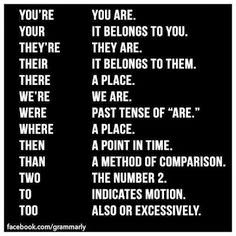
The most common errors I see are the ones you mostly see as well: you're, your, they're, their, there, we're were, where, then, than, two, to, too.  This handy-dandy guide takes all the guesswork out of it.


And while you're at it, go ahead and "like" the Grammarly page on Facebook.  That's where that graphic came from, and they're awesome.

There are also commonly confused words and homophones.  These things give me trouble too; I can't use "accept" or "except" or "affect" or "effect" without having to look them up.  It's getting irritating, but for some reason they just don't stick in my head.

But never fear!  Here are two handy links to help.

This one helps with commonly confused words.  The most common one I see as an editor is "farther" and "further", though there are tons.

This one is all about homophones.  Homophones are words that sound the same, but are spelled differently and mean different things.  "Waist" and "waste" are biggies...no one wants to read about the hero in your romance novel putting his hands around the heroine's waste.  That's just gross.  You want to make your readers smile, not gag.

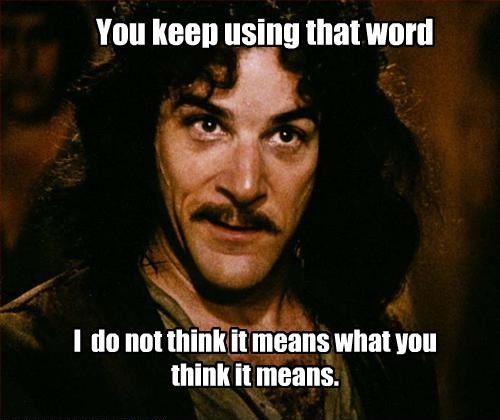
If there was EVER an appropriate time to use this picture, it's here.

Hope this one was helpful!  Do you have a word that constantly trips you up?

xoxo Sarah

Monday, January 13, 2014

Tips for Editing Your Manuscript from a Real-Life Editor, Part 5

Since this little editing series is clearly getting away from me, I'm just going to make these links to the previous entries a permanent fixture in the beginning of each one.  Yay for easy access!

Part 1:  Look it up!  

Part 2:  Read it out loud.  

Part 3:  Have someone who knows what they're doing read it.  

Part 4:  Consistency, consistency, consistency!

And now, introducing...

5) Dialogue tag...you're NOT it!

Have I mentioned I love puns?

Anyway...

A dialogue tag is a little verb that assigns speech to a character.  Here's a great article on them that's definitely worth the read, but I'm going to go over them in general terms.  I will also assume that whoever is reading this is reasonably skilled at writing and is now in the editing process.  This is, after all, an editing tips post, and I'm assuming that we're working with a finished manuscript and it's being edited and cleaned up.  I'm a big proponent of writing what comes out of your head and cleaning up your manuscript later.  Sometimes it's worth it to get those beautiful words down and make them shine afterwards.

While there's nothing inherently wrong with using dialogue tags (DTs), the two most common problems I encounter with them (as en editor) are:

1) Overuse
and
2) Redundancy

Let me explain what I mean by these things, and I think I'll do that best with an example.  I'm going to write a short scene between two characters, and then I'll critique it for you.

"I have a confession to make," whispered Kara as she leaned closer to Mary.  "I love watching cat videos on the Internet."

"Really?" asked Mary, frowning.  "What kind?"

"Any kind," confessed Kara, covering her face with her hands. "Maru. Grumpy Cat. Cats with string. Cats in boxes. Cats playing with laser pointers. It's gotten out of control!" she wailed.  

"Don't worry," Mary told her with a smile. "I watch them all too. So let's find some free WiFi and we can watch some together."

Okay.  Let me address the issue of "overuse" first.  A writer will often use DTs to help designate who is speaking, especially if there are more than two characters having a conversation.  And that's fine.  However, in the editing process, it's worth a look to see when (or even if) it's ever confusing for the reader to figure out who is speaking.  This may be a case for my Part Three post where you get another set of eyes on it, but an author should be able to do this reasonably well on their own.  Also, if paired with an action the speaking character is doing, a DT isn't really necessary.  And unnecessary DTs drag down the pace of your manuscript, especially in action scenes.  Don't get bogged down with them.

Redundancy.  Most often, TDs are rendered redundant by the actions of the characters or other punctuation the author decides to use.  The first DT I used above is "whispered", and while I'm a big fan of using specifically descriptive DTs (example: "whispered" instead of "said quietly"), this one isn't needed at all.  It's clear from the scene that Kara is speaking quietly...people don't usually shout a confession.  "Asked" was the second one, made redundant by the question mark at the end.  It's obvious Mary is asking something, and there's no character confusion here about who is speaking.  "Confessed" is the third, and again, it's obvious Kara is confessing to Mary about her cat video-watching obsession.  Not needed, AND it's too specific.  When you use dialogue tags, it's best to stick with the tried and true simple ones: said, asked, and similar ones.  Let your characters' actions do the talking.  Don't get over-flowery or you risk coming across as a writing amateur.  The same thing with "wailed."  It's pretty specific, and Kara's anguish comes across with her actions and the exclamation point at the end (which are fine to use sparingly).  "Told" is the last one, and just not necessary.  Once again, it's obvious who the speaker is when paired with the action.

Now here is the exact same scene, but with NO dialogue tags at all.  See the difference?

"I have a confession to make."  Kara leaned closer to Mary.  "I love watching cat videos on the Internet."

"Really?" Mary frowned. "What kind?"

"Any kind." Kara covered her face with her hands. "Maru. Grumpy Cat. Cats with string.  Cats in boxes.  Cats playing with laser pointers.  It's gotten out of control!"

"Don't worry." Mary smiled at Kara.  "I watch them all too. So let's find some free WiFi and we can watch some together."

The message of the scene is clear, and the actions speak loudly for themselves.  There is no confusion about who is speaking.  Could a writer use dialogue tags here?  Sure.  But sparingly.  Sprinkle them in your manuscript, don't shovel them.

What's your take on dialogue tags?  Love them?  Hate them?  Avoid them like the plague?  How about cat videos?  Do you like those as much as Kara?

Here are pictures of Maru and Grumpy Cat for good measure.  Because cats.

Maru in a box, like usual.


I hope you all are finding these editing tips and things to watch out for to be helpful!

xoxo Sarah

Friday, January 10, 2014

Tips for Editing Your Manuscript from a Real-Life Editor, Part 4

Whoa! Someone's on a blogging roll now!

Part 1 of this series of entries on how to do a great job of editing your manuscript to ready it for publication (self-pub or traditional publishing, makes no matter to me), discussed looking up things you don't know, or verifying information.

Part 2 was all about looking like a crazy person (hey, if you're a writer, you already hear voices in your head...) and reading your work out loud to yourself to catch errors, especially in dialogue.

Part 3 went over having someone who really knows what they're doing look your manuscript over.

And part 4 is about...

4)  Consistency, consistency, consistency!

Um, okay, but what the heck does that even mean?

One way to interpret that is to write consistently (a bit every day) and edit consistently as well.  And that's awesome advice, but that's not how I mean it.

Because this series is about editing, I'm begging you to use versions of words consistently.

For example, have you ever written "pony tail" to describe a woman's hairstyle?  Or maybe you wrote it as "ponytail" instead?  How about "no one" or "no-one"?  Do you write "OK" or "okay"?  Or maybe "Goddamn" or "goddam" or "God damn" or any of the other countless variations?  And did you write these words multiple times in your manuscript?  Probably yes, right?  Do you see my point?

Most of the time it doesn't matter how you write them (though some of these definitely have spellings that are more accepted than others) but you need to write these words the same each time you use them.  They can be tough to catch, and are often caught in the later stages of editing when your manuscript is (mostly) done, but it's worth paying attention to.

When I'm editing a manuscript, be it my own or someone else's, and I come across one of these, I'll do a global search for them.  I can hear you asking how you do that.  It's pretty simple.  In your Word doc, click "find" in the upper right of your "home" screen (or try "CTRL F") and type in the word you want to find. You'll be able to tab through each instance of the word.  Then do a search for the other variations of the word.  Didn't find any?  Good.  You've been writing it consistently.  Found some?  That's okay!  Just pick which one you want to use (or whichever one is "accepted" or "correct") and change them all to that one.

What it's like when you find the one time you spelled something differently, but less cute.

Why is this important?  After all, it reads the same whether you write "ponytail" or "pony tail", right?  Because it's about the integrity of your manuscript.  You want it to be all clean and matching and, whether you notice it or not, if you're not consistent in your wording, it'll come across like you didn't care about how polished your manuscript was.  Like you didn't bother to read it over before you sent it in.  And that can matter when you're querying agents or publishers or, if you're self-pubbing, it can matter if you want readers to return to your online outlets and buy and read more of your work.  I don't like to return to stores that look like they don't care (unless I absolutely have no choice), so why would I return to an author who doesn't either?

What your manuscript will bring to mind if it's not cleaned up.

I've done it too.  When I was starting Fate's Awakening, I didn't really pay attention and I ended up writing both "soul mate" and "soulmate".  Microsoft Word didn't seem to care either way, but I did, and I changed them all to the two word version for consistency's sake.

Don't like the idea of having to comb through your manuscript for these words?  When you're starting a new story, make note of which version of the word you're using, and reference that when you go to write it.

What are your thoughts on consistency in your wording?  Do you have a particular method of catching these "oopses"?  Tell me your strategy!

xoxo Sarah

Thursday, January 9, 2014

Tips for Editing Your Manuscript from a Real-Life Editor, Part 3

To recap, the first tip for doing a good job on editing your own manuscript encouraged you lovely writers to look it up.  The second one wanted you to read your manuscript out loud to yourself.

Onward to the third one!

3) Have someone who knows what they're doing read it.

And by that, I mean a professional editor, or a beta reader, or a critique group in your local writer's association, or some form of one of these things.

I can't tell you the number of times I (and my fellow editors...yes, we talk about this stuff) have heard some variation of:  "Thanks, but I can't afford [your services] right now, so I'll have my friend who's an English major/English teacher/blogger friend/sister in high school who gets straight A's in English/etc. read it over for me. That's pretty much the same thing as what you do, right?"


There's a reason we charge what we do, and that's because we know what to look for in a manuscript.  Depending on the service you're paying for, we can help you with plot/character/writing style critique, grammar/spelling/punctuation issues--the list goes on.  You get what you pay for, and always ask for references.

Other ways to get good feedback are to take writing workshops.  Often there will be critique involved during the "classes" (even the online ones), and you'll get to work and study with other authors who write in your genre.  Sometimes there's a bonus for signing up for one, like the instructor will critique your first three chapters or first thirty pages or something along those lines.

On the other hand, if you're lucky enough to be able to trade services with someone who is familiar with these things, great!  That's a win/win.  You get a chance to learn and work with someone else who can help you as well.  It's much easier to find errors and patterns in another person's work, because you're not constantly reading it and immersed in it.  I've learned so much from editing others' manuscripts that I can apply to my own writing.  Editing has literally made me a better writer.

Otherwise, good luck with asking for help from your English major cousin who posts things like this on Facebook:


Keep in mind that it's awesome to have pre-readers of any kind.  They can give you valuable feedback on whether your manuscript is boring, if it drags in parts, whether your action sequences are exciting enough, if your sci-fi aliens are plausible, etc.  And that's all good stuff.  But they, in no way, should substitute for a quality editing job.

How would I know this is important?  Because a professional editor looked over the first fifty pages of my manuscript (I'd taken a workshop with her and this was a "bonus" for signing up for it), and immediately pointed out that I used the word "some" far too much.  She'd even highlighted every time I'd used it...and WHOA.  There were too many yellow words in my manuscript for my liking.  Did I really use "some" that much?  Apparently.  I was shocked, but it was something I'd never caught in all my read-throughs.  Why?  Because of author blindness, plain and simple.  She brought many other things to my attention as well that helped me immensely with my manuscript, but this one really made me realize that author blindness is a real thing, alive and well.

Let me tell you a little story to illustrate the cumulative importance of all of these editing posts.  I was at a book fair with my publisher last year.  I even had a sweet little badge that said "editor" on it, which was simultaneously exciting and terrifying.  Keep in mind that I am no way in charge of accepting/rejecting manuscripts.  That's for our acquisitions department.  This event was more for industry professionals and networking than for authors, but there were a few writer workshops going on and a bunch of authors were making the rounds at the (many) publishing booths.  Once in a while one of them would stop by our booth, all nervous and excited and, after they found out what we published, would hand us a synopsis of their manuscript and their contact information.  We'd always politely thank them and take the synopsis no matter what.

During some down time we started to read through some of the synopses, and I was shocked at how many of them had glaring problems.  Not wonky formatting or anything like that, but spelling errors, run-on sentences, grammar issues, you name it.  I literally couldn't make myself finish reading some of them (and keep in mind that a synopsis is short--typically 1-3 pages).  And this is the piece that they're handing to publishers in hopes that someone will fall in love with their story--likely something they've been slaving over for a long time--and want to put it out into the world.  Out of the few I read, I probably wouldn't have requested any of the manuscripts based on the errors in the synopses alone.  Think about it--if this piece is their selling point, what condition is the actual manuscript in?  I'd never want to subject an editor to that kind of a job.

You never want to put someone off your work before they've even actually read it, plain and simple.

Have you worked with a professional editor before?  Do you trade critique services with someone?  Is there a point I missed that's good editing advice?  I may address it in another entry.

Tell me your editing strategy!

xoxo Sarah

Tuesday, January 7, 2014

Tips for Editing Your Manuscript from a Real-Life Editor, Part 1

In this new year, I'd like to do more to help my fellow writers.  I've always been inspired by the lovely Susan Kaye Quinn, who has always been so open to assisting other authors who ask for it.  She even compiled a new ebook that combines a series of blog entries (along with new material) to help folks make up their mind whether they want to self-publish or not, and how to do just that.

But what to help other authors with, exactly?  What skill set do I have that I can use for the greater good?

Well, I'm an editor.  A real-life professional one.  So we'll start there.  I'll give a few credentials to start...I'm contracted with a mid-size publisher to edit with them. I do free-lance editing, as well as critiquing in various forms for people.  I've also been part of a team that accepts/rejects online submissions to an online story archive.  So I've been editing in some form or another since 2008.  This ain't my first rodeo.

So, editing...  One of the hardest things to do is edit your own manuscript--or really your own work in general--because of author bias.  We (as authors) are naturally blind to certain things, and have read our own work over so many times that we don't even catch things like missing words.  Feel free to laugh...I've done that myself.  But we're obviously forced to do some editing before anyone who belongs to the publishing industry powers-that-be (an agent or acquisitions editor, for example) sees our work.  It needs to be in excellent shape to be considered for publication, though it is understood that it'll have to go through further editing during the publication process if it's lucky enough to get that far.  But you want to give your manuscript the best chance possible, right?

But then how do authors get their own work in shape to go out into the world? That's where I come in.  These tips are in no particular order, and are a guide to those of you who want to do a good job at self-editing (and good editing ideas in general) before you start querying or officially self-publish your book on Amazon or Smashwords or wherever you're doing it.  Especially with self-publishing, a quality product will translate into higher sales.  Readers have high standards, so strive to meet them.

I'm even going to split this into multiple parts, because I got a bit carried away and this entry became far more detailed than I'd expected.

So onward to the first point...

1)  Look it up.

This may seem intuitive, but we all make common writing errors.  All of us.  No one is immune.  Let me repeat that: NO ONE IS IMMUNE, even you, Super Writer.  So if you're using one of the many commonly misused words, or like to use (or abuse) semi-colons, look it up to make sure you're using them correctly, even if you're pretty sure you are.

Where do I find this information?  Well, when I edit, I reference the incredibly clunky Chicago Manual of Style.  But it's not user-friendly, even for those of us who know what section we're looking for.  Honestly, for most grammar issues, I use Painless Grammar.  The examples in it are easy to understand, and none of it is overly complicated.  However, there are countless grammar books like that one, so find one that works best for you.  And there's always Google, though I'd be more careful with that, unless you're one of those people who trusts everything they read on the interwebs.

"But," you may ask, "don't most manuscripts you see already have this kind of stuff ironed out?"  Well, no.  They don't.  And sometimes I want to put the Cone of Shame on an author.

When I edit a manuscript and return the work to the author, I always include a list of repeated issues I've come across.  By that point I've spent hours--sometimes it cumulatively adds up to days--reading their work over and over, and I feel it's partly my job to point these things out because it can help the author learn and they'll be less likely to repeat these things in future manuscripts.  It makes less work for me (or whoever the editor is who's editing their new work) and the author learns something valuable.  It's a win/win.  In one recent manuscript I had, the author constantly confused further/farther, and I had to do a global search in the document for both words to make sure the correct one was used (or fix it if it was incorrect).  So I made sure to let her know about that when I returned it to her.  This is something that would have easily been fixed by the author taking a few minutes to check which word would have been appropriate.

And before you ask, yes, I do it too. Even with as long as I've been editing, one thing that still trips me up is affect/effect and every damn time I write one of them I have to make sure I'm using the correct one.

What's your favorite reference to use when writing?  Internet?  A particular book?

Point #2 is coming up shortly, so stay tuned!

xoxo Sarah

Tuesday, April 17, 2012

"O" is for Oatmeal

And when I say Oatmeal, I mean The Oatmeal, a creation of Matthew Inman, a former programmer who now makes his living from his hilarious and well-drawn web comics.  Among other things, his commentaries often focus on observational humor (such as Every time is snows in a big city), current events (Why Netflix is splitting itself in two), real-life experiences (Cat vs. Internet), and my personal favorite, grammar and punctuation.

Honestly, I've learned more about proper usage of certain things through The Oatmeal's little drawings than my whole brick-like Chicago Manual of Style, 15th edition.  I even have posters of his grammar comics.

Yeah.  Be jealous.  You know you want them, too.

Here. Learn to use a semi-colon.

Or maybe 10 words you need to stop misspelling.

Or even the difference between two common sayings...flesh out and flush out, courtesy of The Oatmeal.

Why haven't I put any of his comics in this blog post? Because I don't want to get sued for plagiarism.  Go check out the awesomeness of The Oatmeal at the source.


xoxo Sarah

Saturday, April 7, 2012

"G" is for Grammar. And Punctuation. NSFW (a tiny bit)

Yes, I know punctuation starts with a "P", but grammar and punctuation go together like peanut butter and jelly, or salt and pepper (the spices, but the rap group would work, too), or Brangelina.  You just can't separate them.

As a writer and editor, I'm rather particular about what I read and write, especially if I'm looking at something in a professional capacity.  I'm much more forgiving of things that are more stream-of-consciousness (like this blog, for example), but most of the time, errors in G&P take me right out of whatever I've been reading and make me want to facepunch something.  Rather than give you a whole bunch of reasons on why I'm anal retentive about grammar, let me go ahead and give you some images of real-world examples. In picture form, because, frankly, I like finding and posting them.

Some of the pictures are a little NSFW (not safe for work) but if you have any kids who can't read yet who are looking over your shoulder, you should be okay.  You're welcome for the hilarity.


And finally, one that my husband knows well...


xoxo Sarah

Monday, April 25, 2011

"U" is for Urban Dictionary

Ever walk by a group of teenagers (or anybody, really) and hear words that sound like English, but you know can't be, leaving you to wonder, "What the hell are they even talking about?  And get off my lawn, damn kids!"

Or ever hear someone use common words in a totally new and unusual way, making their original meaning irrelevant? Or hearing someone use an acronym and wondering if repeating it in front of your boss will get you fired or a promotion?

Yeah, it happens to all of us.

Enter Urban Dictionary, the every-person's personal Rosetta Stone for slang.  Just type in the word you're curious about (providing you know how to spell it, and have nerves of steel to find out what it actually means), and search.

Take nom for instance.  You might have heard someone say they were going to get noms or that they were in the middle of nomming when someone called them.  Curious, you'd just search, and find out that nom is an expression of eating, and derived from "om nom nom."  I use this word a lot myself.  I say that the cat was nomming on my shoelaces, or that something smells like delicious noms, or seems nommable.  There's even a little green monster in an app game for iPhone/Android who is named Om Nom.  The point of the game (which is called Cut the Rope) is that you feed Om Nom candy.  Makes sense, now that you know what nom means.

Since 1999 (so says their website), Urban Dictionary has helped millions define the world around them.  As a writer, I find the site to be fascinating.  I love learning new words, and you never know when using one might come in handy.  I strive to make my dialogue realistic when I write it, and for that, I often have to look things up.  Working with how real people speak adds realism to your stories and connects with your audience.

Any thoughts on Urban Dictionary?  Are you a fan?

xoxo Sarah

Friday, April 15, 2011

"M" is for Mixed Metaphor

Ah, the good 'ole metaphor.  We learn about metaphors and similes in school, but as a refresher, they're both means of comparing something to something else.  Similes use "like" or "as" to make the comparison, and metaphors do not.

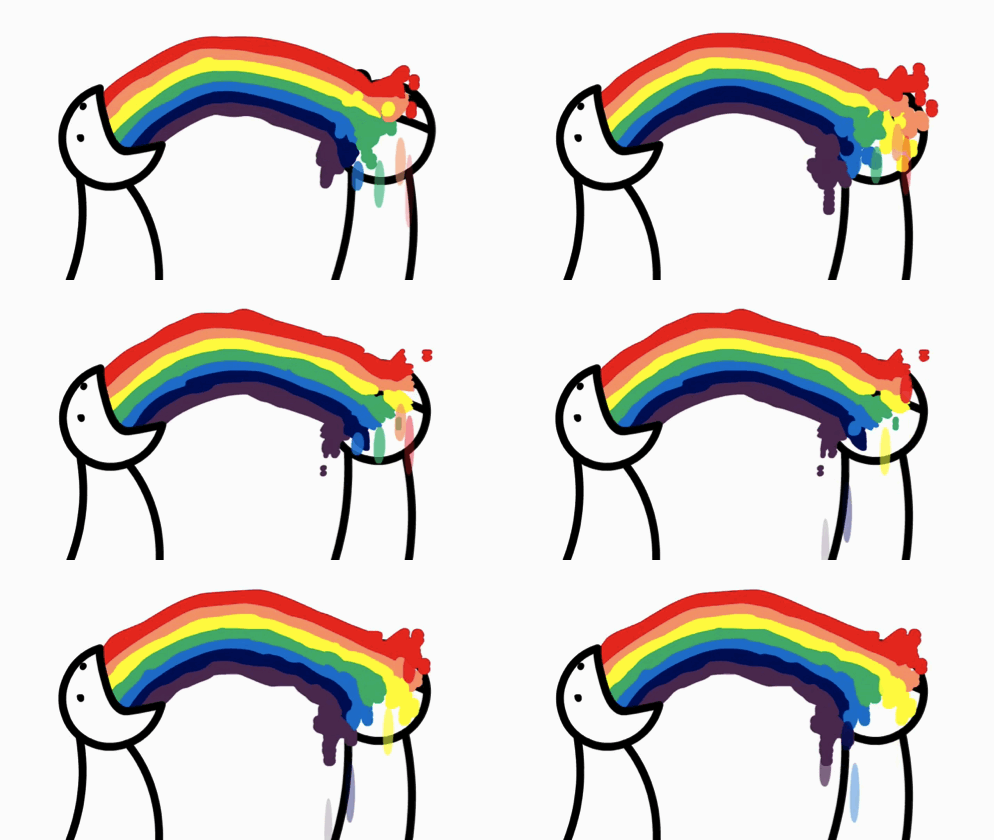
Example of a simile: Whenever I talked to Linda, she was so disgustingly cheerful it was like she vomited rainbows all over my face.  

Example of a metaphor:   Love is a battlefield.  


Nope, couldn't find a good picture for that one that didn't involve Pat Benatar.

Anyway, you get the point.  Both are often used in literature, though comparisons like these are most effective when used sparingly.

Though I've found that they're just as effective when they're royally effed up by the author (maybe on purpose) or by the speaker.  Then they become what's known as the super-awesome "mixed metaphor."

Mixed metaphors are what happens when someone smushes two comparisons together, making a ridiculously illogical comparison.  They happen to everyone, and have hilarious results.  Sometimes what the speaker or author meant isn't changed by the incorrect phrase, and sometimes it's clear as mud.

My personal all-time favorite that I use in real life is, "It's not rocket surgery."  Obviously this little phrase is a mash-up of, "It's not rocket science," and, "It's not brain surgery," yet the meaning is still clear, at least in this case. Here, courtesy of this article, are some other mixed metaphors.  Some still make sense, some, well, not so much.

"So now what we are dealing with is the rubber meeting the road, and instead of biting the bullet on these issues, we just want to punt." (Chicago Tribune, cited by The New Yorker, August 13, 2007)

"Top Bush hands are starting to get sweaty about where they left their fingerprints. Scapegoating the rotten apples at the bottom of the military's barrel may not be a slam-dunk escape route from accountability anymore." (Frank Rich, The New York Times, July 18, 2008)

"Federal Judge Susan Webber Wright stepped up to the plate and called a foul." (Catherine Crier, The Case Against Lawyers, 2002)

"Her saucer-eyes narrow to a gimlet stare and she lets Mr. Clarke have it with both barrels." (Anne McElvoy, London Evening Standard, Sep. 9, 2009)

"That's awfully thin gruel for the right wing to hang their hats on." (MSNBC, Sep. 3, 2009)  


Some of those actually gave me a headache trying to figure them out.  But don't hesitate to enjoy a good mixed metaphor...in small doses, they might even be what your story needs.  You can use them to break tension, to show a character's personality, or just to be creative, especially in dialogue.  No one gets things right 100% of the time when speaking, so why should your characters be any different?  Most of all, have fun with them.  


xoxo Sarah

Saturday, April 9, 2011

"H" is for Homonym

My "H" for the A-Z Blogging Challenge is the incredibly frightening and often abused homonym.

Why are people afraid of them, and why are they abused?  Because a lot of people don't know what homonyms are.  So, I'll tell you.  Homonyms are words that sound the same but have different meanings, but they can be broken down even more into two categories: Homographs are words that are spelled the same but have different meanings, and homophones are words that sound the same when you pronounce them but have different meanings.

Why am I prepared to rant about homonyms?  Because Facebook is making me.  I'm totally serious.  You have no idea how many people's posts I come across who use these words incorrectly, among many, many others.  It makes me ragey.

Anyway, homonyms cause a lot of confusion, even with basic writing.  Mistakes I see often, even with adults, involve the improper use of "they're" (contraction of "they are"), "there" (shows location), and "their" (shows possession).  Or "your" (shows possession) and "you're" (contraction of "you are").  Or even "two" (the number), "to" (expressing motion or location), and "too" (in addition).

So, for the love of Jesus on a Velociraptor, don't post something like this on your friend's Facebook wall: "Is the party at you're house or there house?" **FACEPUNCH**


And the next time I see a line like, "He put his hands around my waste," I certainly hope the writer meant something like this ----->

....and NOT something that will make me want to scoop my eyeballs out with a grapefruit spoon.  Because, as this freaked-out cat will attest, what has been seen cannot be unseen.  Or unread.  And I'd tell that guy to keep his disgusting hands off of my waste.


Other popular homonyms include tail/tale, toe/tow, week/weak, reel/real, pail/pale, made/maid, bear/bare, and even right/write.  Before you leave me an awesome comment, scroll up and take a look at the title of this blog.  And yes, I did that on purpose.  I had to come up with a title and didn't have time to waste/waist.

xoxo Sarah